
SUMMARY
I spearheaded the redesign of Goldsmiths University's Virtual Learning Environment to modernise the learning experience, improve accessibility, and make complex academic journeys feel clearer and more human.
THE STUDENT EXPERIENCE
The Virtual Learning Environment at Goldsmiths is a critical platform for accessing a wide range of academic resources used by students and staff. While content-rich, benchmarking the VLE against other universities revealed a clear gap in interface quality and usability. Core interactions such as broken breadcrumbs, a cumbersome calendar, and limited out-of-hours support made navigation unnecessarily complex and eroded user confidence. As both a student and a designer, I was uniquely positioned to combine first-hand user insight with a realistic understanding of delivery constraints, enabling a focused and achievable upgrade to the platform.
My journey began with comparative analysis and hands-on evaluation of the existing experience, followed by qualitative and quantitative research with students through surveys and focus groups. I identified key opportunities to simplify navigation and increase autonomy, including clearer wayfinding, a burger-style sidebar, improved course organisation, and the introduction of a mobile app. I synthesised these insights into actionable recommendations and collaborated closely with the Teaching and Learning Innovation Centre to prioritise and implement improvements, balancing pedagogical needs, technical feasibility, and long-term scalability to deliver a more intuitive and supportive VLE experience.


MAKING EDUCATION ACCESSIBLE
As I deepened my understanding of accessibility standards thanks to my postgraduate studies, this became a core pillar of the VLE upgrade. As we set up focus groups, I stressed to my team the importance of getting insights from a diverse range of users: ensuring we cover frustrations from users of different genders, ethnic backgrounds, and abilities.
As students from different backgrounds and with different abilities access academic content on our platform, it is important that we do not alienate certain users in the process of this VLE upgrade. We needed educational content to remain accessible to all students, as that was a key ethos at Goldsmiths University.
Our research found that as we didn't comply with WCAG guidelines, this impacted 16% of students. And this could have been improved through a combination of design changes, such as improving information hierarchy, navigation clarity, contrast, and interaction patterns, while ensuring changes were feasible within existing technical constraints.
I also held training sessions with departmental staff to support them in creating more accessible course pages. By reframing accessibility as a small shift in existing workflows rather than a chore, I helped build shared ownership and capability, ensuring accessibility improvements were sustainable beyond the lifespan of this project.
It became clear how achievable compliance with Web Content Accessibility Guidelines can be, and how frequently higher education institutions fall short in meeting them. I identified this gap as both a design and organisational opportunity: to embed accessibility not as a retrospective fix, but as a foundational product principle that reflected Goldsmiths’ commitment to its diverse student body.
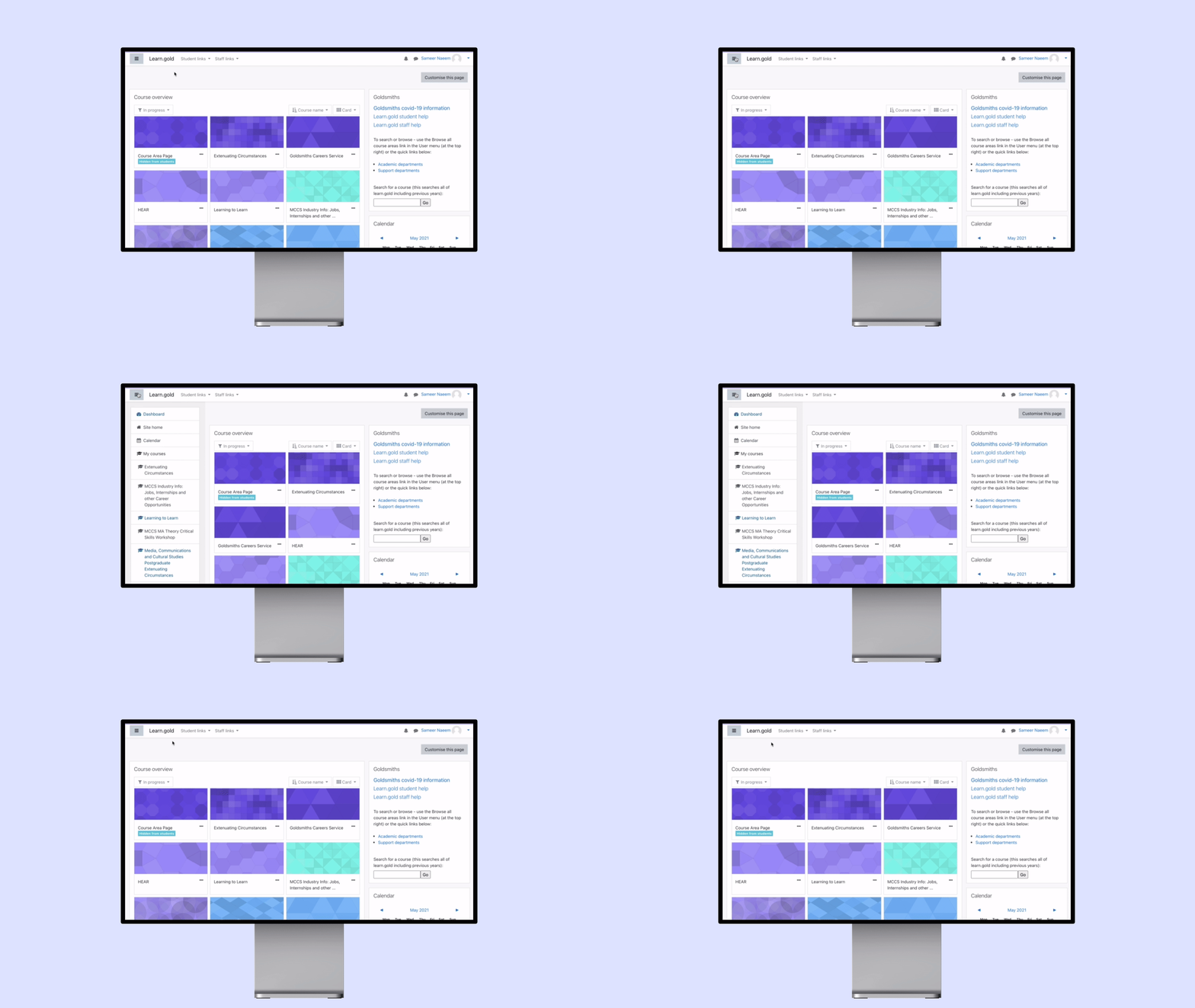
Throughout the VLE upgrade, we worked with a clear understanding of meeting users' needs while navigating deadlines and the technical constraints of Moodle, which hosts the VLE. These constraints ultimately shaped our product decisions and required us to prioritise improvements that delivered the greatest user impact within what was technically feasible.
A key challenge was translating desktop improvements to the native Moodle mobile app. Due to limitations in Moodle’s infrastructure at the time, many of the interface and interaction upgrades could not be extended to the app, despite native mobile access emerging as a consistent user need across surveys and focus groups. This highlighted a clear tension between user expectations and platform capability.
In response, we focused on maximising value where possible. We implemented accessibility enhancements and applied elements of the new design system to the native app to improve consistency. We also uncovered a significant awareness gap: many students and staff did not realise native mobile access to the VLE already existed via the Moodle app. By clearly communicating these options and improving the mobile web experience, which mirrored the full set of desktop upgrades, we gave users meaningful choice between a native app for convenience or a fully upgraded mobile browser experience, ensuring continued access to learning on the go despite technical limitations.
TECHNICAL LIMITATIONS

